












Water is an essential resource for life, but it is also a strategic asset for economic development. Understanding how water consumption is linked to productive sectors is key to promoting decisions that contribute to sustainability and the country’s water security.
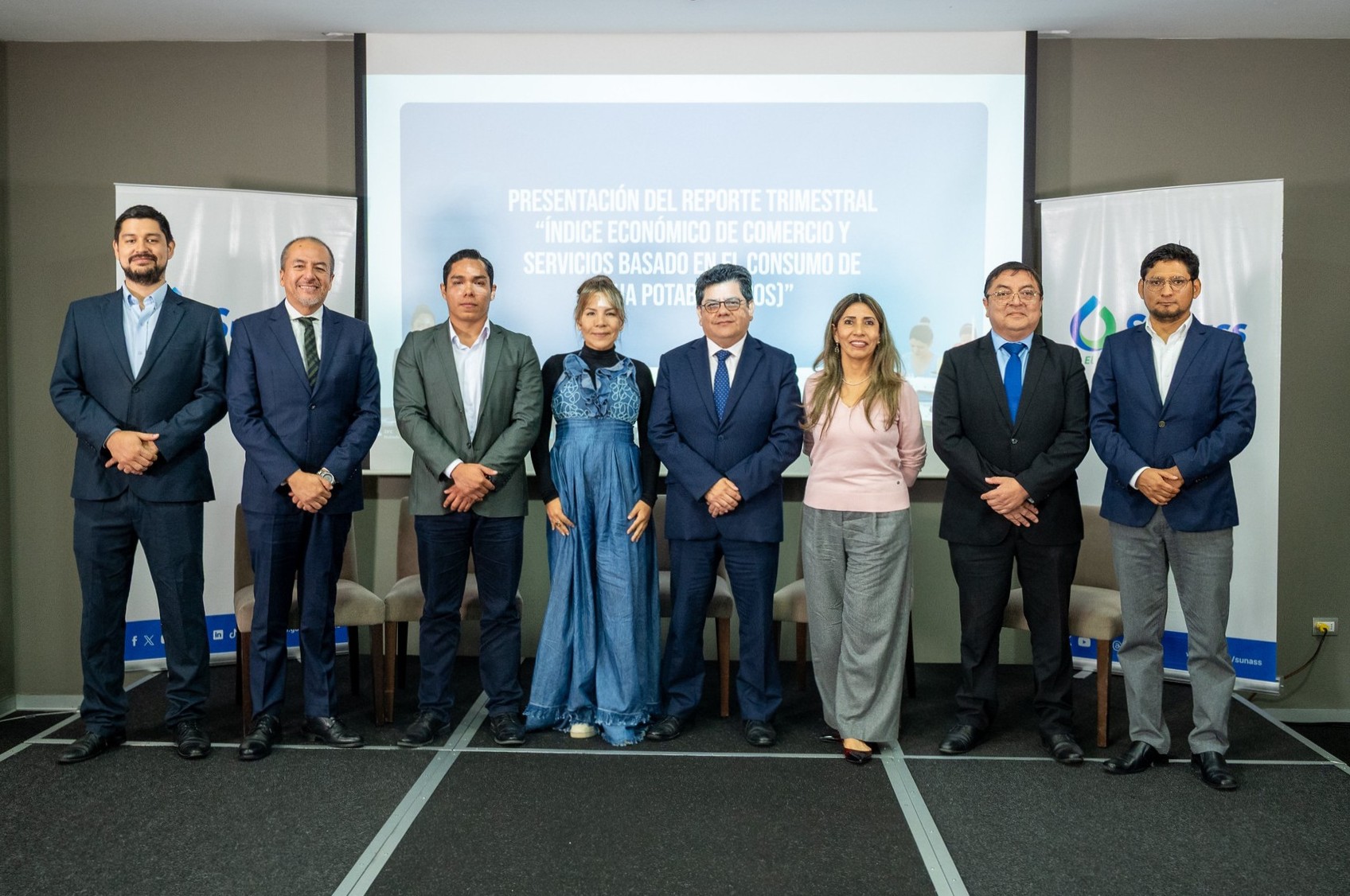
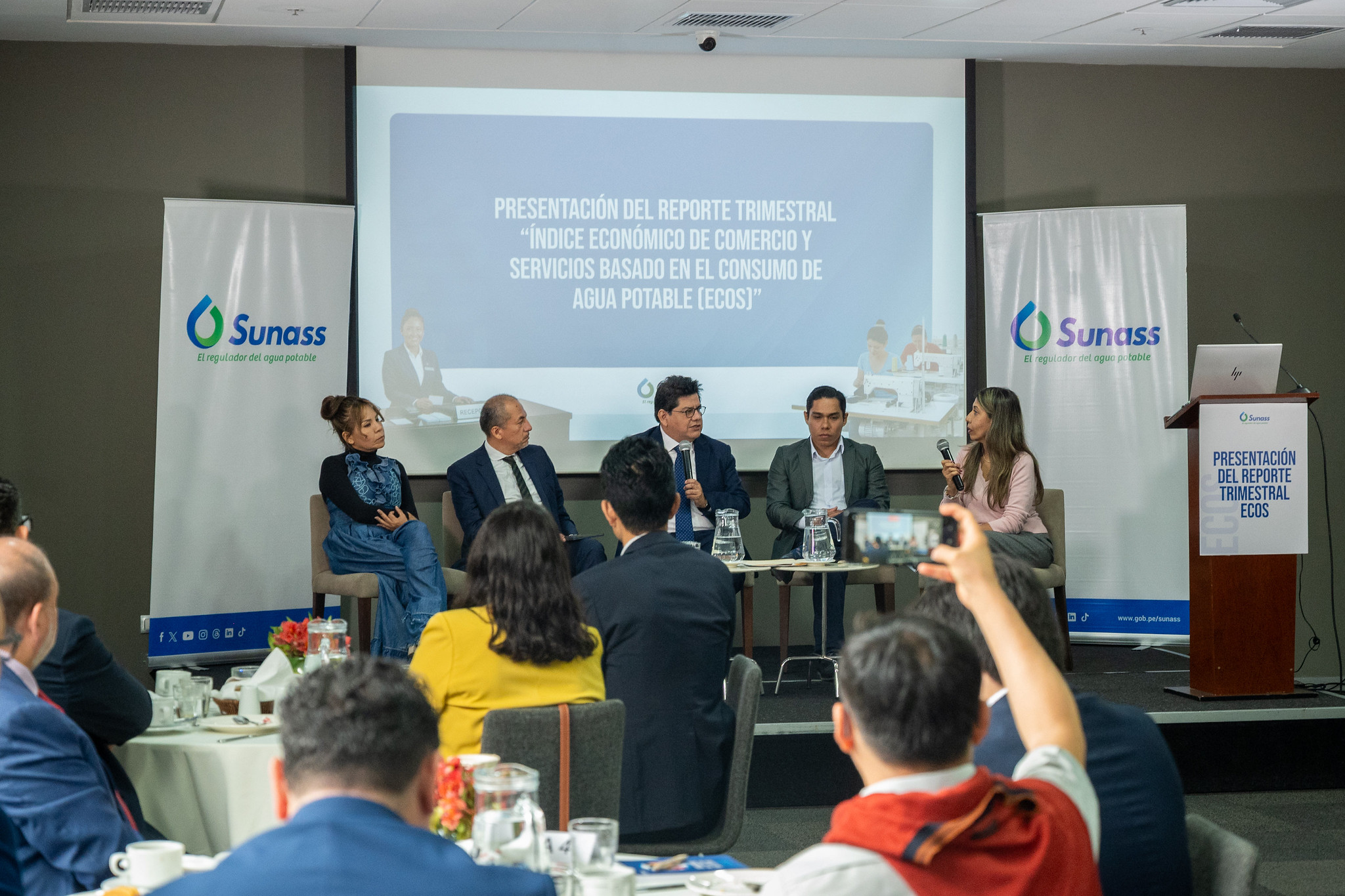
With this premise in mind, Aquafondo participated in the presentation of the Quarterly Report of the Economic Index of Commerce and Services Based on Drinking Water Consumption (ECOS), developed by the Sunass.
This tool analyzes the relationship between drinking water consumption and the economic activity of sectors with high water demand in Metropolitan Lima and Callao, such as the textile industry, hotels and restaurants, and shopping centers.
Water, economic development, and evidence-based decision-making
The event brought together representatives from the public and private sectors, as well as international organizations, to reflect on the challenges of sustainable water management in a context of growing water demand and economic development. Throughout the event, participants highlighted the importance of having data and evidence that enable a better understanding of the behavior of productive sectors and help anticipate risks associated with water availability.
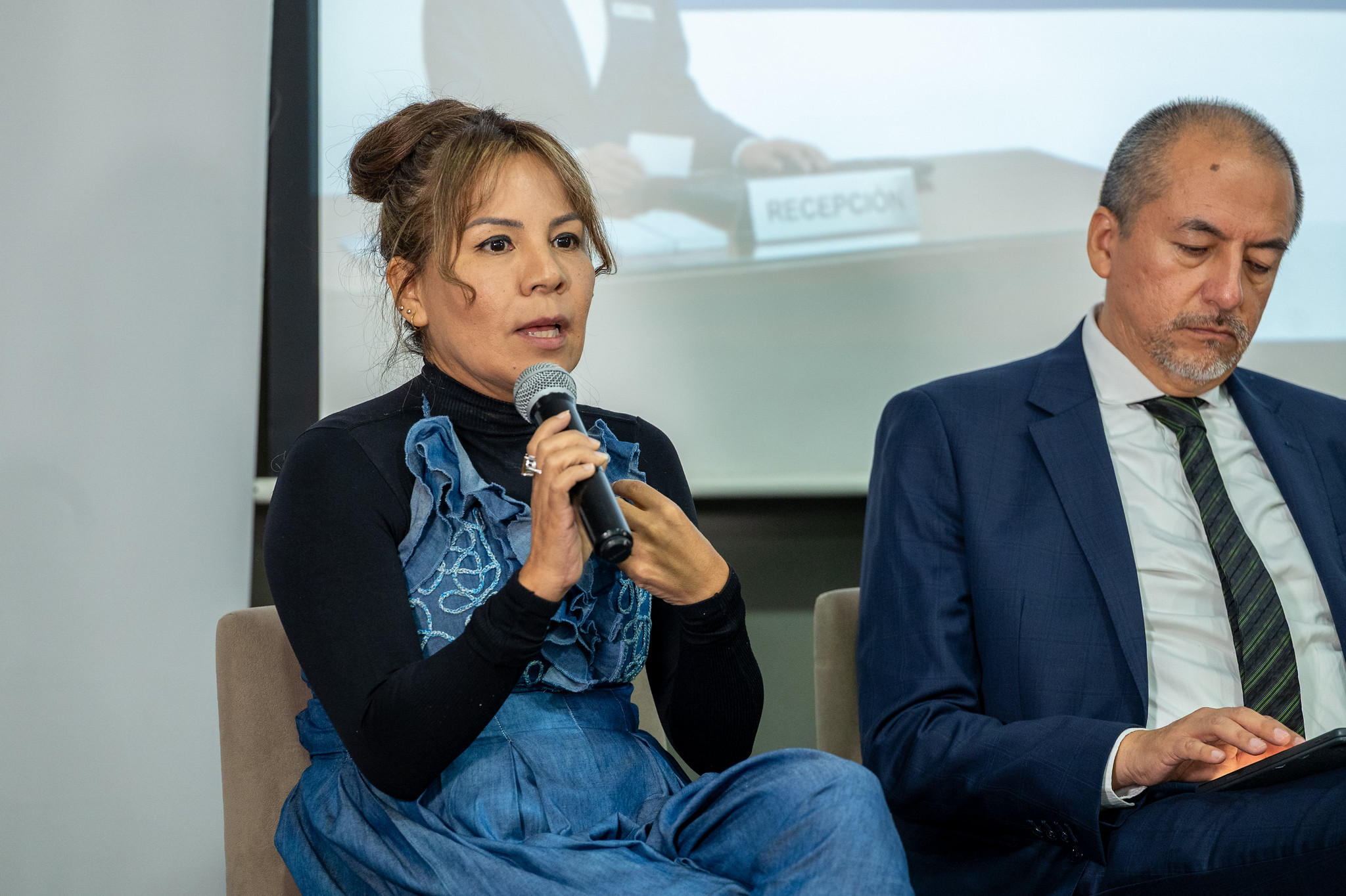
The panel discussion and closing remarks were moderated by Mariella Sánchez Guerra, Executive Director of Aquafondo, who emphasized the need to promote evidence-based decision-making to strengthen water security and advance more sustainable development. She also highlighted the value of tools such as the ECOS Index in transforming data into useful information for planning and efficient water management. She also highlighted the value of tools such as the ECOS Index in transforming data into useful information for planning and efficient water management.
The panel featured the participation of Mauro Gutiérrez, Executive President of Sunass; José Francisco Torres Medina, Water and Sanitation Specialist at the Inter-American Development Bank (IDB); Omar Cárdenas, President of the Business Sustainability Commission of the Cámara de Comercio de Lima; Manuel Fernando Muñoz Quiroz, General Manager of Sunass; and Roy Cóndor Guerra, Economic Information Management Specialist at Cami Yaku.
Sustainability as an opportunity for innovation
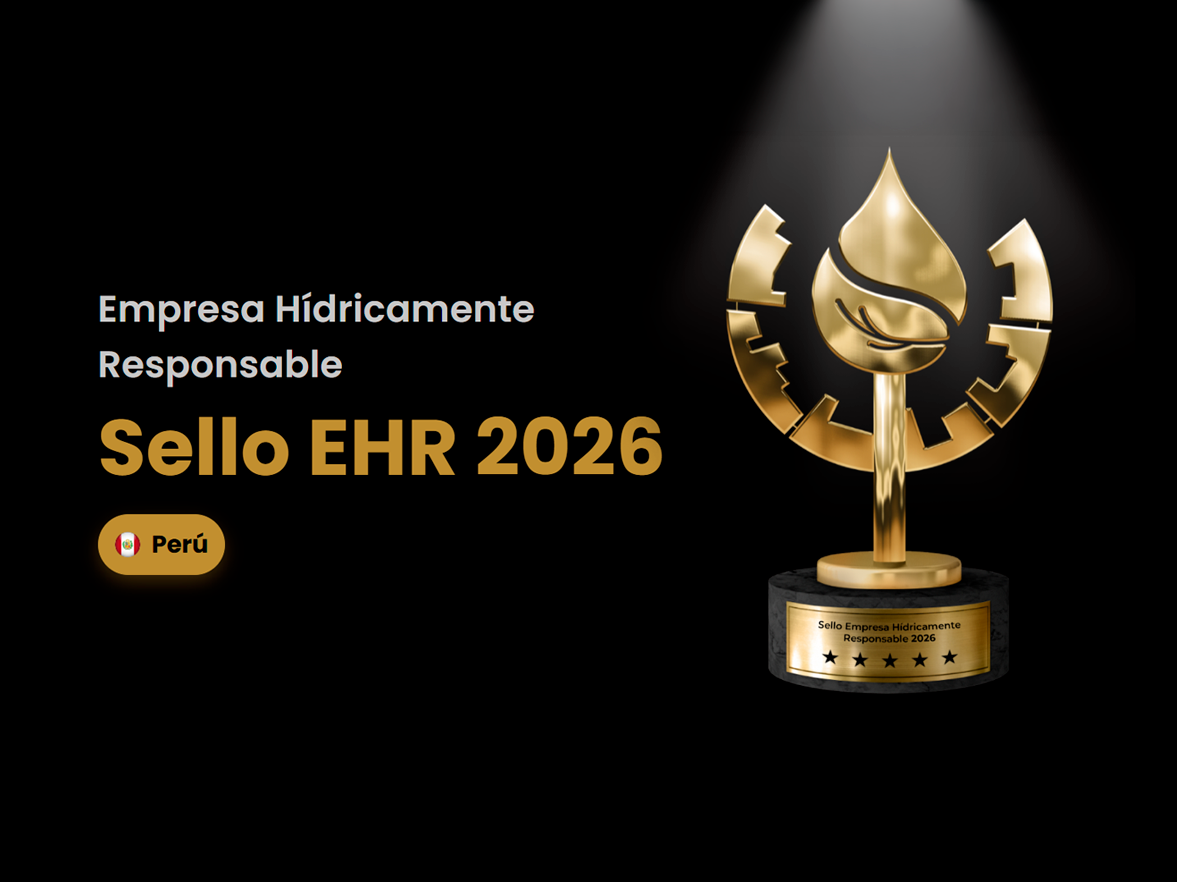
One of the most enriching moments of the event was the participation of Isabel Goyburu, Technical Director of Dyeing at Nuevo Mundo, a member of Aquafondo’s Water Responsible Companies Network and recipient of the Water Responsible Company Seal.
Drawing from the textile industry’s experience, Isabel Goyburu shared the challenges companies face in advancing toward greater water-use efficiency. Among these challenges, she highlighted the investments required to implement water reuse systems, the return periods associated with those investments, and the need for specialized personnel capable of operating increasingly sophisticated technologies.
However, she also demonstrated that sustainability can become an opportunity for innovation and enhanced competitiveness.
During her presentation, she explained how the incorporation of new high-performance dyes helped optimize one of the company’s production lines. Thanks to this innovation, the company significantly reduced the number of rinsing cycles required in the process, lowering water consumption while maintaining high quality standards and generating operational efficiencies that benefit both the business and the environment.
Her experience demonstrated that sustainability does not depend solely on large infrastructure investments. It is also built through strategic decision-making, technological innovation, continuous monitoring, and the ongoing improvement of production processes.
Information to anticipate risks and strengthen water security
Throughout the panel, the experts agreed that information is a fundamental element for promoting more efficient water management and anticipating the risks associated with the growing pressure on water resources.
In this regard, Mariella Sánchez Guerra highlighted that tools such as the ECOS Index make it possible to transform data into useful knowledge for decision-making. These tools help improve the understanding of the behavior of water-intensive productive sectors and facilitate more effective planning in the face of water scarcity scenarios.
The Executive Director of Aquafondo, Mariella Sánchez Guerra, also emphasized that water should not only be understood as a vital resource for life, but also as a strategic asset for the country’s economic growth and development. Therefore, having access to up-to-date information makes it possible to identify gaps, guide investments, and promote more timely actions to address the challenges associated with water resource management.
Measuring to understand the relationship between water and economic development
The presentation of the ECOS Index also highlighted the importance of measuring water consumption in the country’s economic activities. Built from drinking water consumption records of companies in Metropolitan Lima and Callao, this indicator makes it possible to analyze the performance of sectors with high water demand, such as the textile industry, hotels and restaurants, and shopping centers.
The results presented show that water consumption patterns can provide valuable insights into the economic dynamics of different productive sectors. In the case of the textile industry, the index reflects changes associated with market demand over recent years, while the hotel and restaurant sector, as well as shopping centers, continue to show a positive growth trend.
Having access to this type of information makes it possible to better understand how water influences economic activity and how economic activities, in turn, impact water demand. In a context where water holds increasingly strategic social, environmental, and economic value, measuring, monitoring, and analyzing its use becomes a fundamental tool for anticipating risks, identifying opportunities for improvement, and promoting decisions that contribute to more efficient and sustainable water management.

