











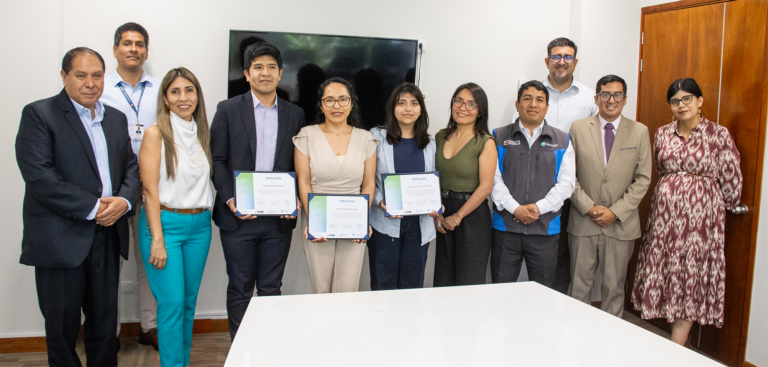
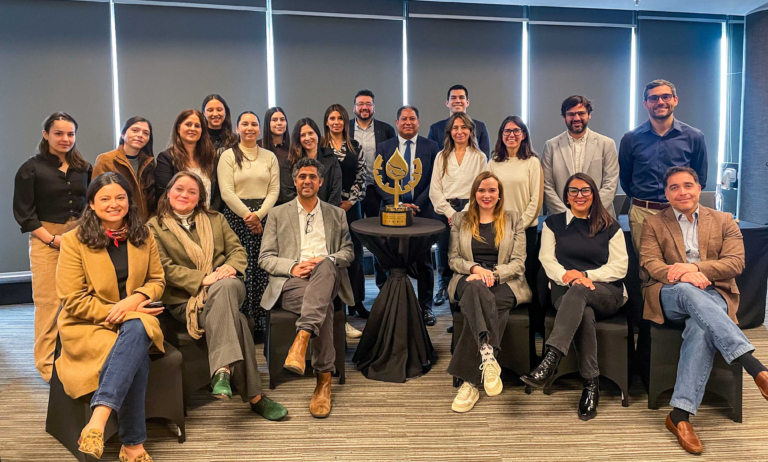


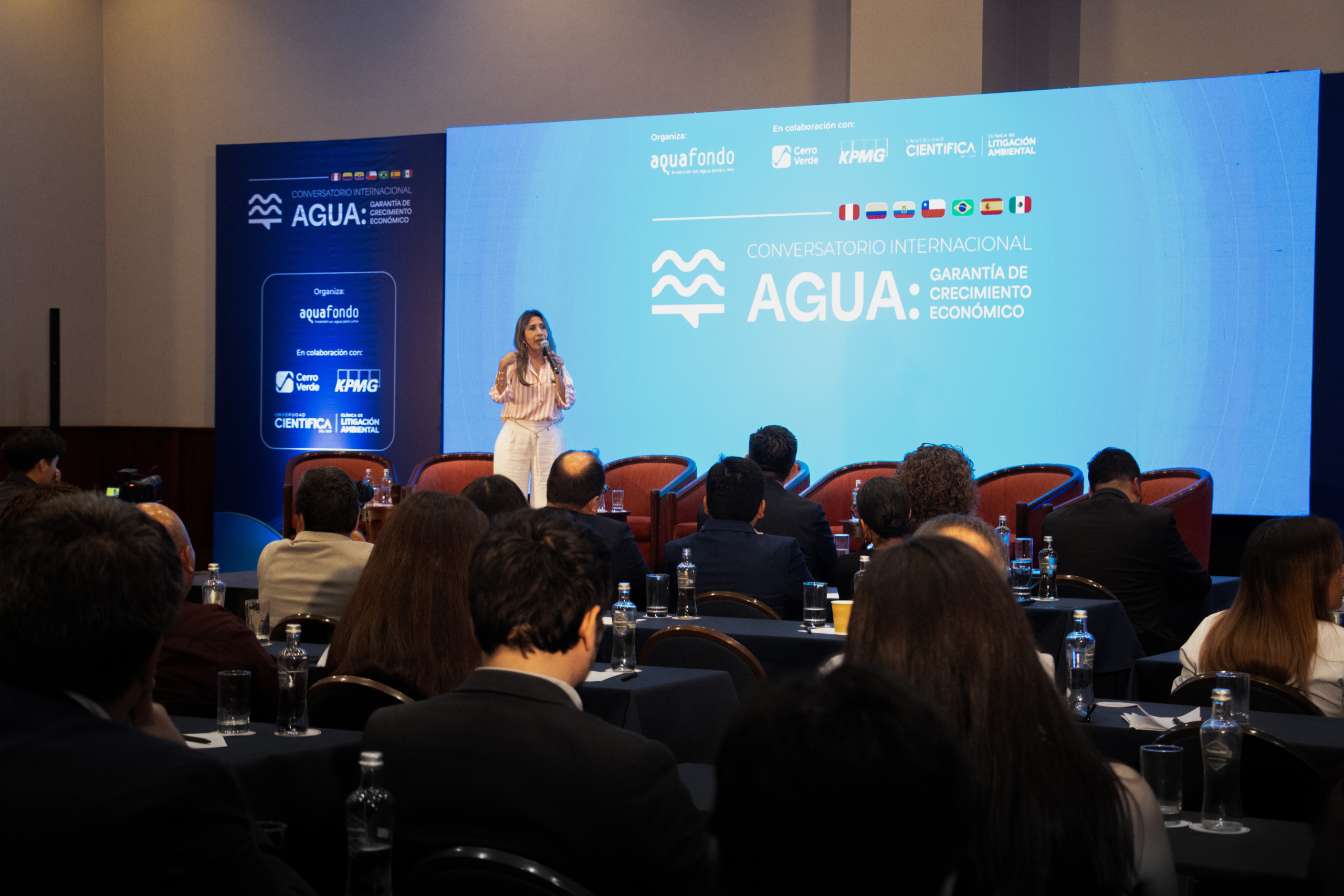
Water was established as a key factor for business competitiveness and economic growth during the International Roundtable “Water: A Guarantee for Economic Growth,” organized by Aquafondo in collaboration with Cerro Verde, KPMG, and the Universidad Científica del Sur (UCSUR).
We brought together in Lima leaders, experts, and representatives from Spain, Chile, Colombia, Brazil, Mexico, Ecuador, and Peru, in a space designed to connect evidence, share experiences, and promote decision-making in response to the water crisis.
The main message was clear: water management is already a strategic decision for businesses.
Water management and business competitiveness: a new strategic approach
During the event, it became evident that corporate water management directly impacts productivity, operational continuity, and business sustainability.
We agreed that integrating water into corporate strategy enables companies to anticipate climate risks, strengthen resilience, and improve business decision-making.
It was also emphasized that water should no longer be addressed solely from a demand perspective, but rather managed based on its availability, incorporating it tangibly into planning and corporate budgets.
Water has evolved from being an operational resource to becoming a strategic asset for sustainable economic growth.
Solutions that work: water recharge and nature as key infrastructure
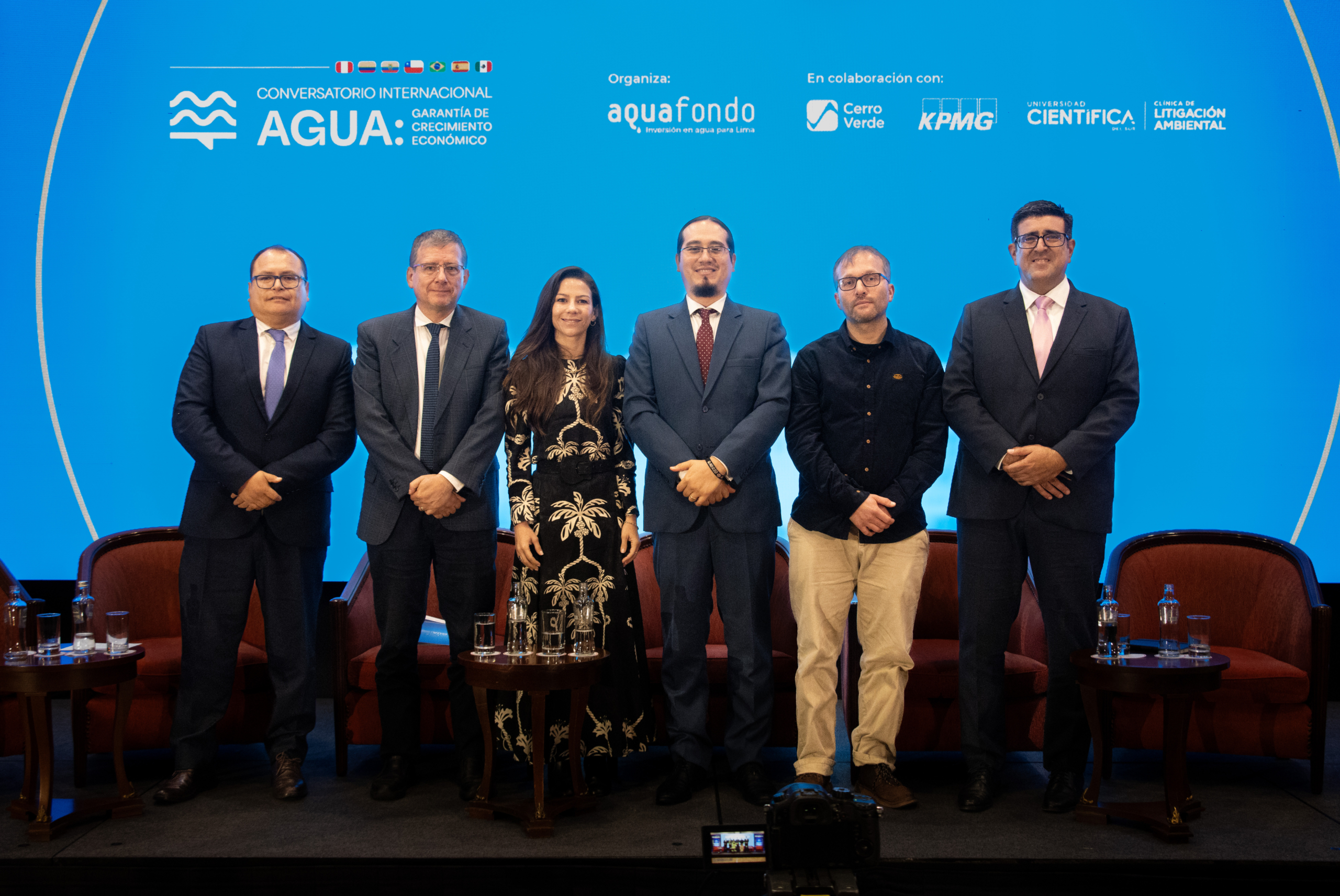
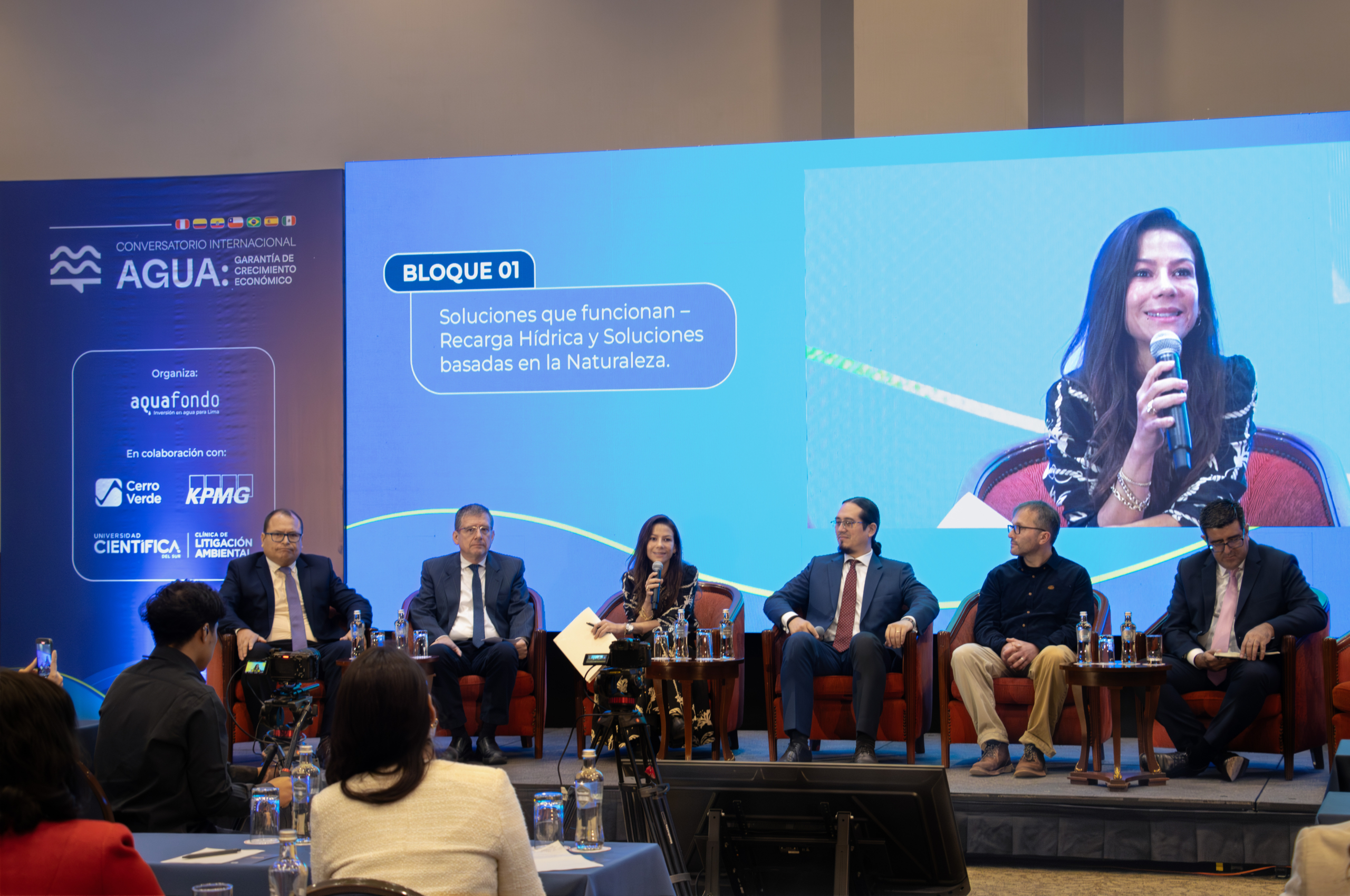
The first session focused on Nature-Based Solutions (NbS) and water recharge, highlighting their role as strategic infrastructure to ensure long-term water availability.
This session was co-moderated by María Claudia De La Ossa (Fondo de Agua Cuenca Verde, Colombia) and Max Carbajal (Ministry of Housing, Peru).
The panel featured the participation of:
Bert de Biévre (FONAG, Ecuador)
Jan R. Baiker (ACEMAA, Perú)
Yván López (Aquafondo, Perú)
Yancarlo Castillo Sagastegui (PepsiCo, Perú)
The interventions showed that solutions already exist, but the challenge lies in scaling them. To achieve this, the need was highlighted to: overcome administrative, operational, and institutional barriers; strengthen coordination among stakeholders; build trust with local communities; and generate and share knowledge across the public sector, private sector, academia, and civil society.
International experiences: water as a driver of economic development
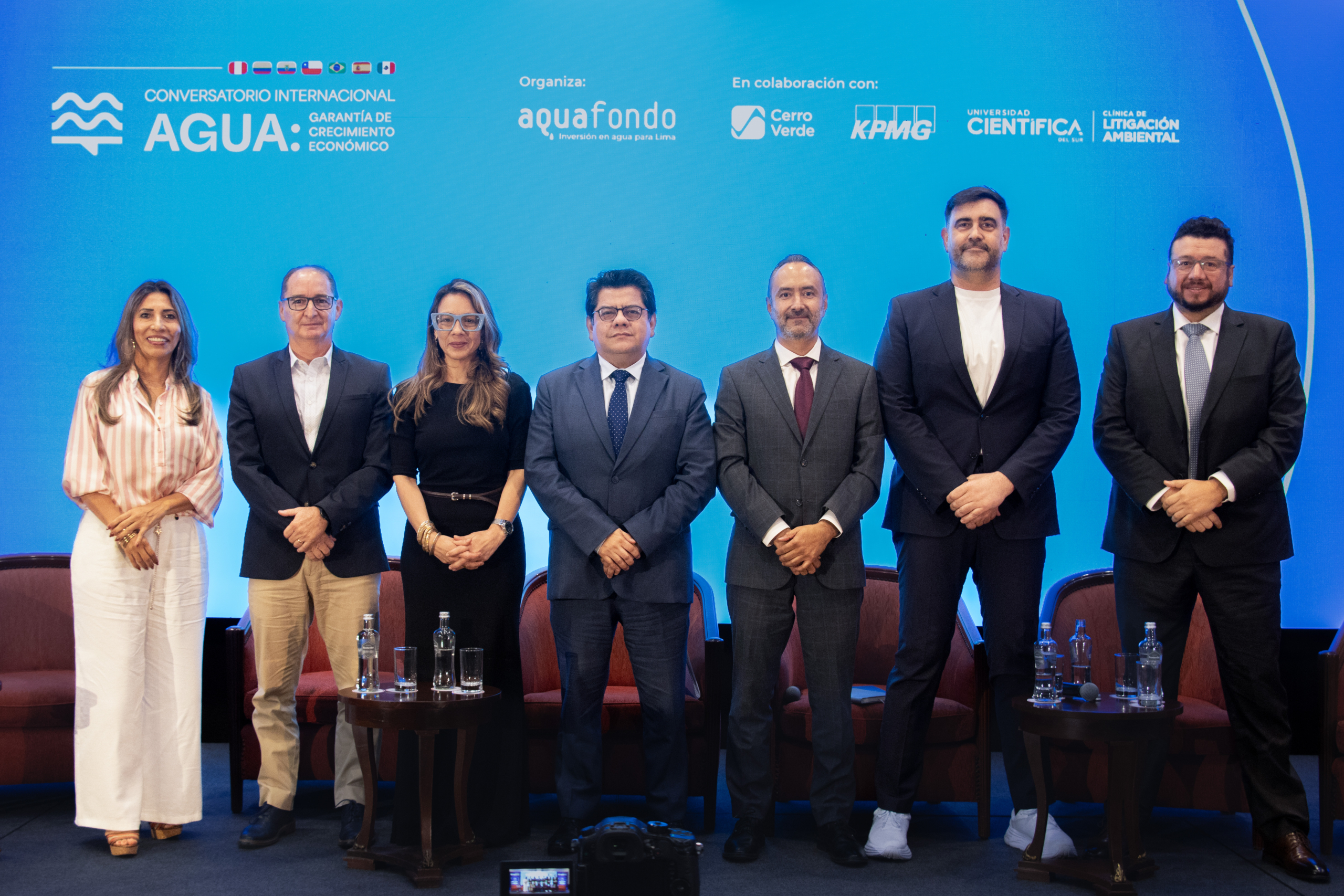
The second session positioned water as a cross-cutting axis of development and an invisible engine of economic growth.
It was co-moderated by Mariella Sánchez Guerra (Executive Director of Aquafondo) and Alejandro Sturniolo (Aqua Positive, Spain), and brought together representatives from different countries:
Mauro Gutiérrez (SUNASS, Perú)
Oscar Leal (Fondo de Agua Cauce Bajío, México)
Andrea Yáñez (Agua Somos, Colombia)
Claudio Reyes (AWUA, Chile)
Pablo Castañeda (Cerro Verde, Perú)
The experiences shared agreed that the productivity of economies depends directly on water availability.
It was highlighted that water still does not occupy the strategic position it should in economic decision-making, making it necessary to make its value visible in both business planning and public policy.
“We are all part of both the problem and the solution. Water security does not depend on a single actor, but on the ability to work together and sustain that effort over time,” concluded Mariella Sánchez Guerra, Executive Director of Aquafondo.
Water governance and multi-stakeholder coordination to scale solutions
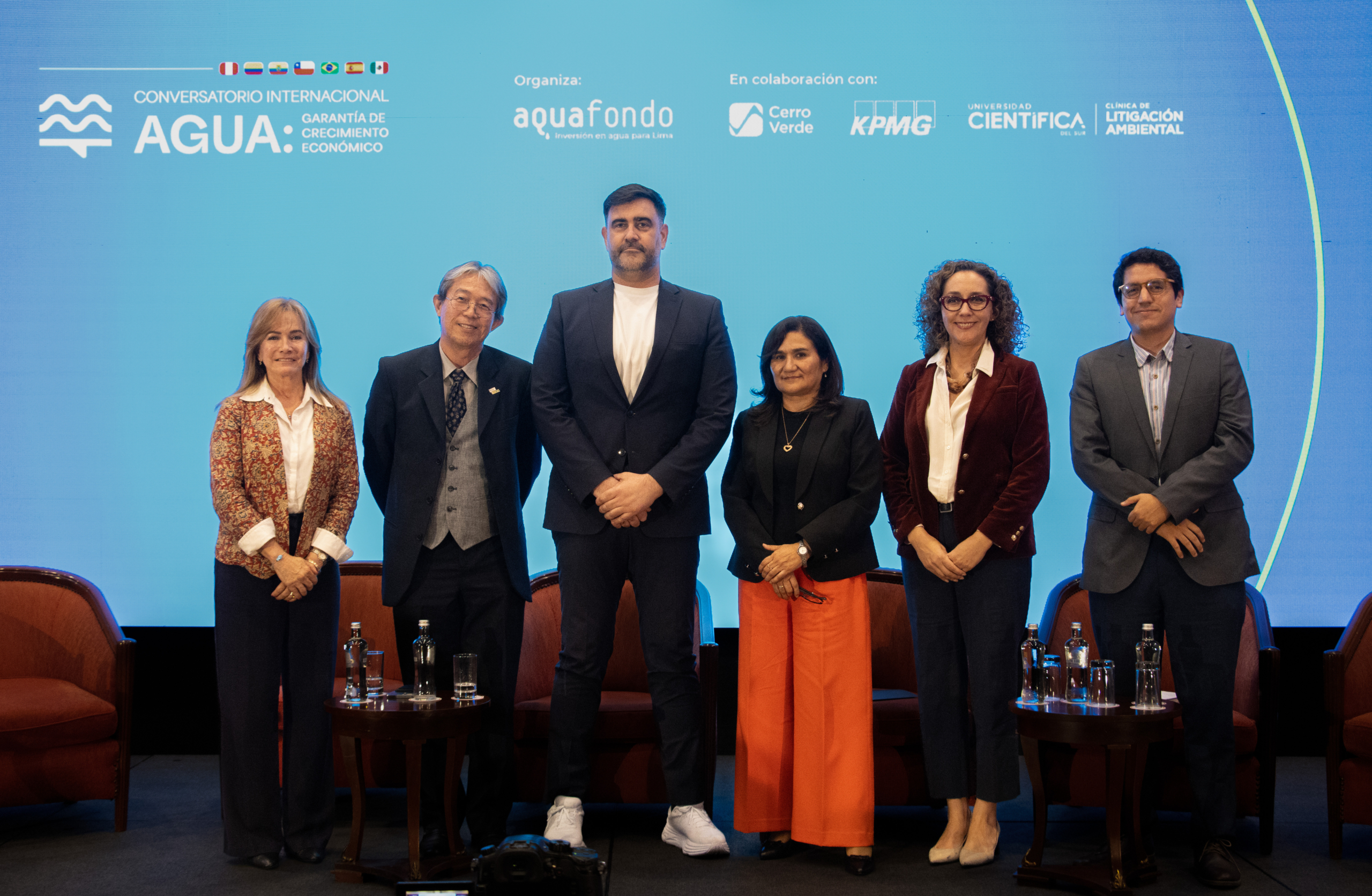
The third session addressed water governance as a key condition for achieving sustainable impact.
Fue co-moderado por Marilú Martens (CARE Perú) y Eduardo Prado (Semana Económica), y contó con la participación de:
Carlos Saito (Universidad de Brasilia, Brasil)
Carmen Zegarra (GIZ, Perú)
Alejandro Sturniolo (Aqua Positive, España)
Karin Eggers (KPMG Chile)
From this space, it was reaffirmed that water governance must be built from territories and watersheds, requires strong institutions, dialogue, and trust, and depends on coordination among all stakeholders.
The need for leadership that brings stakeholders together was also highlighted—whether from the private sector, public sector, or civil society—to align efforts and accelerate decision-making.
Companies and water: from water risk to strategic opportunity
The roundtable reinforced a key idea: water represents both a risk and an opportunity for businesses.
Organizations that integrate water management into their strategy reduce their exposure to risks, strengthen their competitiveness, and create sustainable value.
It was emphasized that water security is not built in the short term, but through a long-term vision that considers ecosystems, territories, and productive activities.
Conclusion: water as a driver of sustainable economic growth
The experiences shared from Europe and Latin America agreed that solutions exist, the stakeholders are in place, and the challenge lies in aligning efforts, making decisions, and scaling impact.
Today, water management is a decisive factor for competitiveness, sustainability, and economic growth.
At Aquafondo, we reaffirm our role as facilitators of stakeholders, knowledge, and action for sustainable water management. We remain committed to promoting spaces that connect the business sector, academia, the public sector, and international cooperation, with the goal of mobilizing decisions, investments, and solutions that protect water and ensure the country’s development.

