








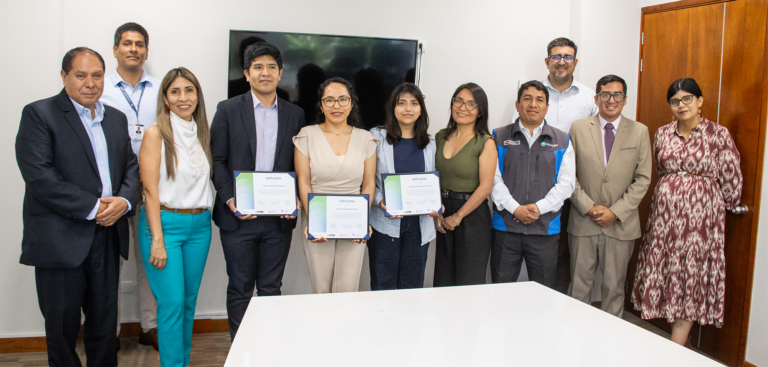
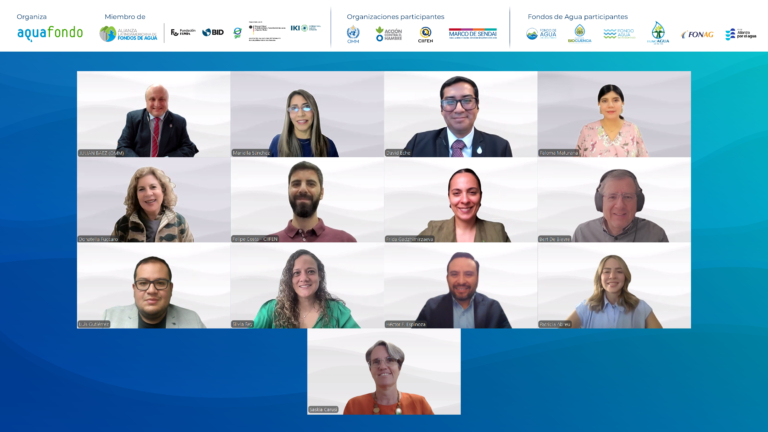


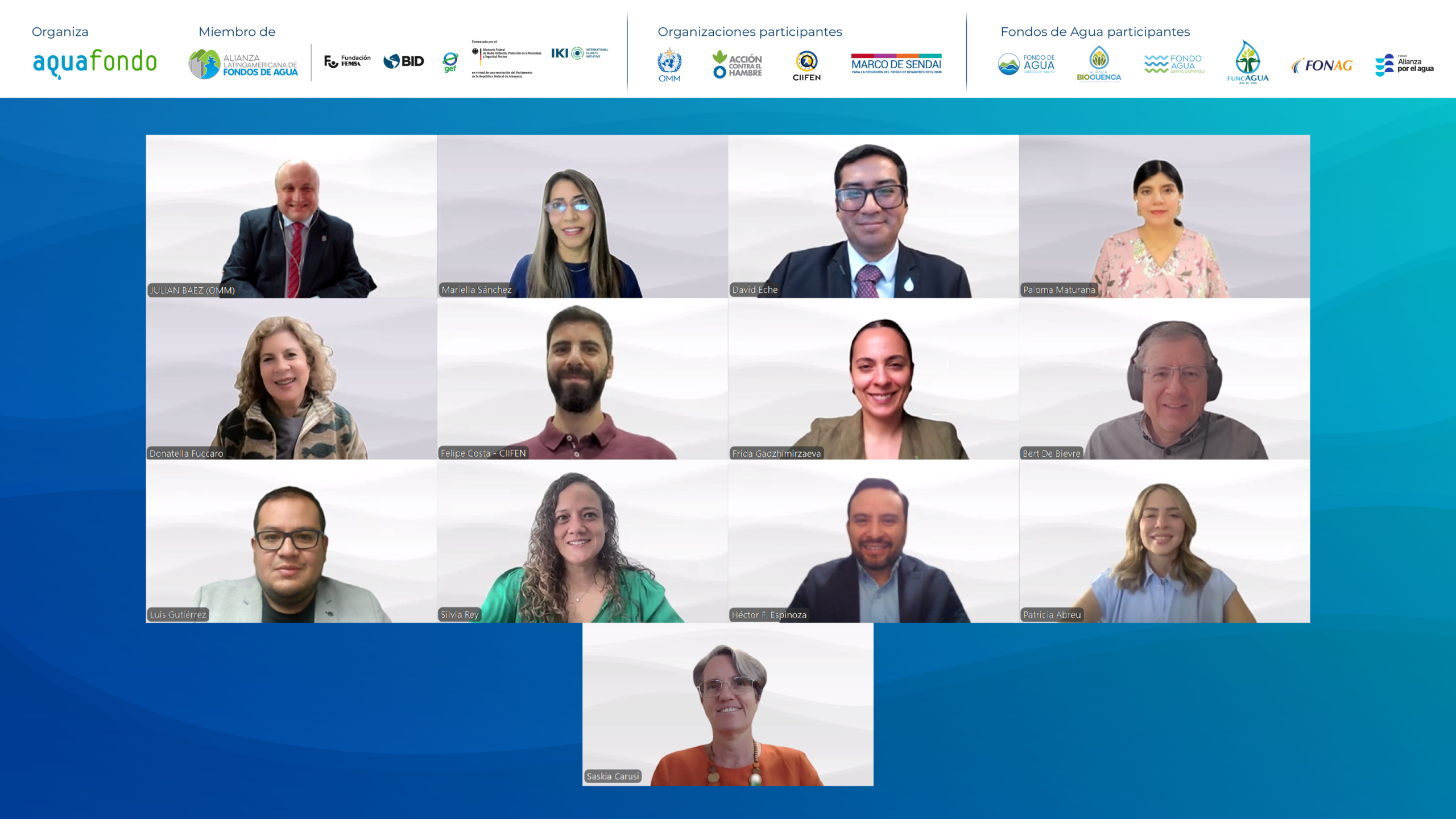
Representatives of Water Funds across Latin America and the Caribbean, together with specialists from international organizations, agreed on the need to strengthen prevention, proactive investment, and regional collaboration to reduce the water-related, social, economic, and environmental impacts associated with the El Niño phenomenon.
This was one of the main conclusions of the International Dialogue of Water Funds from Latin America and the Caribbean: “Strategic Investments to Address the Water-Related Impacts of El Niño”, a virtual event organized by Aquafondo, the Water Fund for Lima and Callao, Peru, together with Water Funds that are members of the Latin American Water Funds Partnership.
During the event, participants shared scientific knowledge, local experiences, and solutions being implemented in different countries across the region, with the aim of strengthening preparedness and the ability to anticipate droughts, heavy rainfall, and flooding.
The Challenges Posed by El Niño
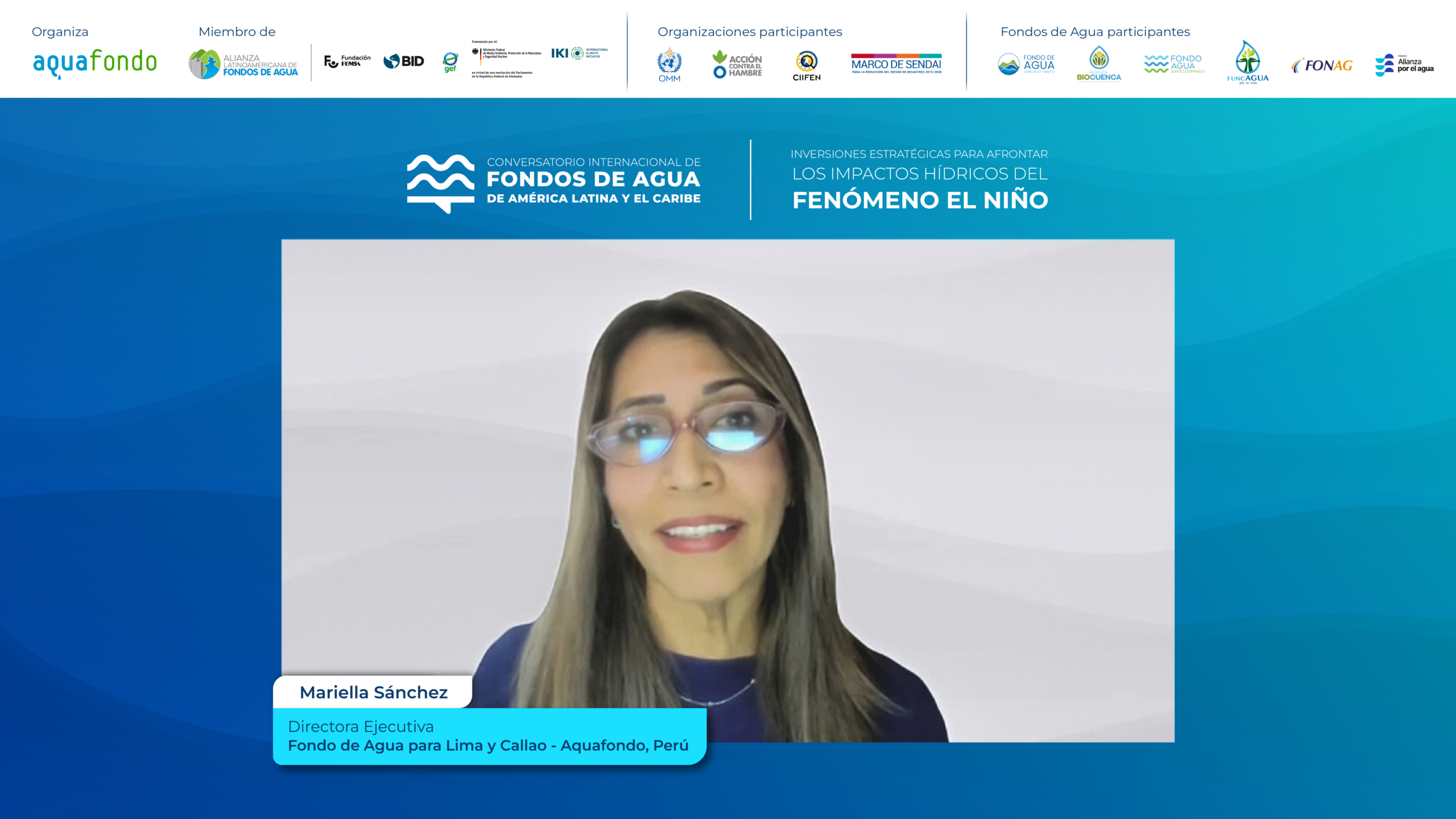
In her opening remarks, Mariella Sánchez, Executive Director of Aquafondo, highlighted that Latin America and the Caribbean are among the regions most exposed to extreme weather events, and that their impacts vary across different territories.
“We cannot wait until an emergency occurs to mobilize resources. Doing so comes at an extremely high social, economic, and environmental cost. We need to shift from reacting to anticipating, from repairing damage to reducing risks, and from mobilizing resources during an emergency to investing before it happens,” she stated.
In this regard, she emphasized that the region now has greater scientific knowledge, stronger institutional capacities, and valuable experience that can help improve preparedness.
“Water resilience is not built during an emergency; it is built beforehand through planning, cooperation, and investment.”
Scientific Evidence for Better Decision-Making
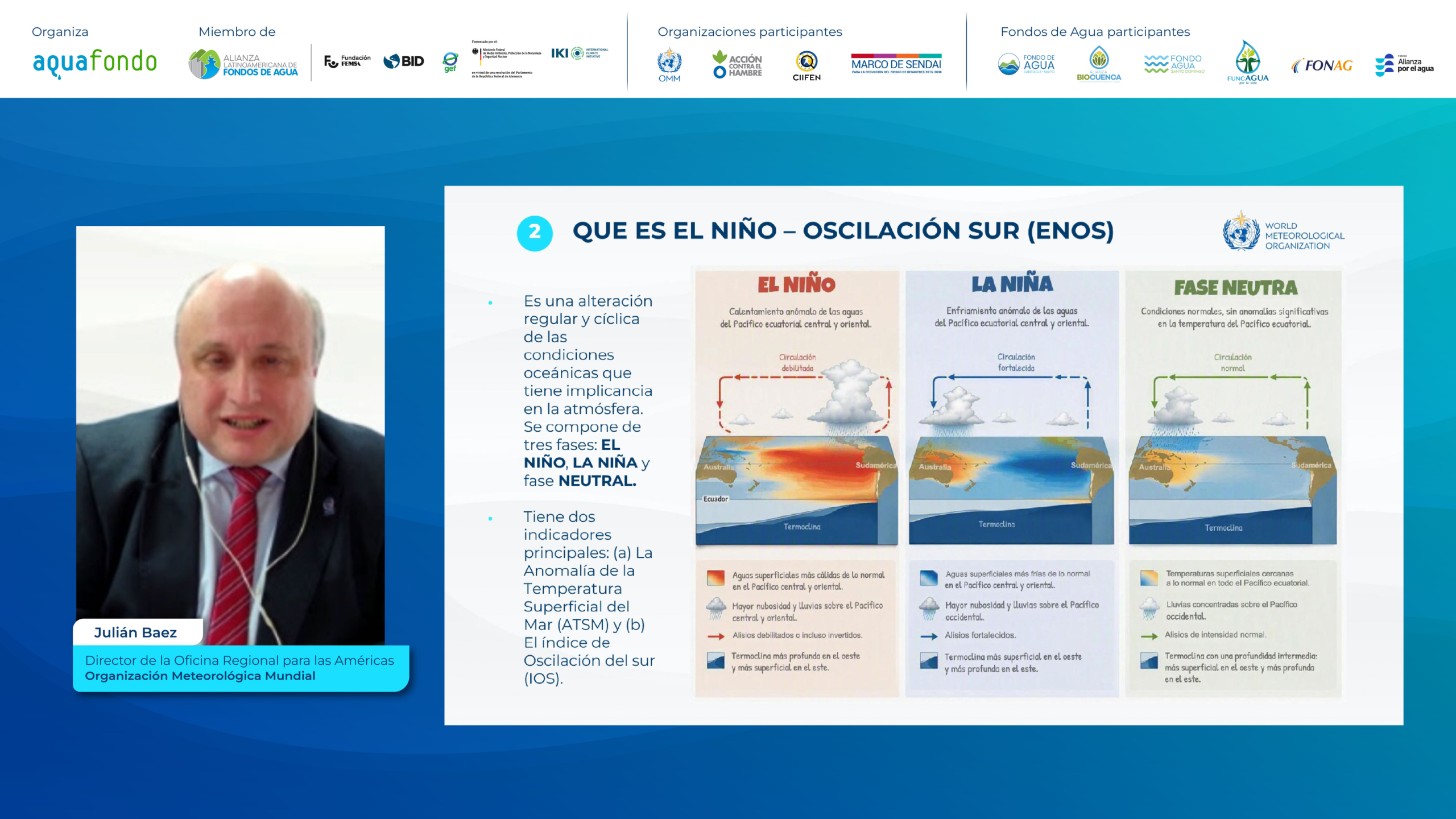
During the keynote presentation, Julián Báez, Director of the Regional Office for the Americas of the World Meteorological Organization (WMO), explained the dynamics of the El Niño phenomenon and its impacts on Latin America and the Caribbean.
Báez noted that El Niño events can have varying effects across the region, ranging from rainfall deficits and droughts to excessive rainfall, flooding, and erosion. He also highlighted the impacts these events can have on agriculture, food security, water availability, energy, health, ecosystems, and economies.
In response to these challenges, he emphasized the importance of strengthening information and early warning systems, climate services for climate-sensitive sectors, integrated water resources management, and regional cooperation, as well as incorporating El Niño-related risks into development planning.
He also called for the use of scientific information and official forecasts to inform decision-making, while urging stakeholders to avoid spreading inaccurate or alarmist information.
Delayed Action Comes at a High Social Cost
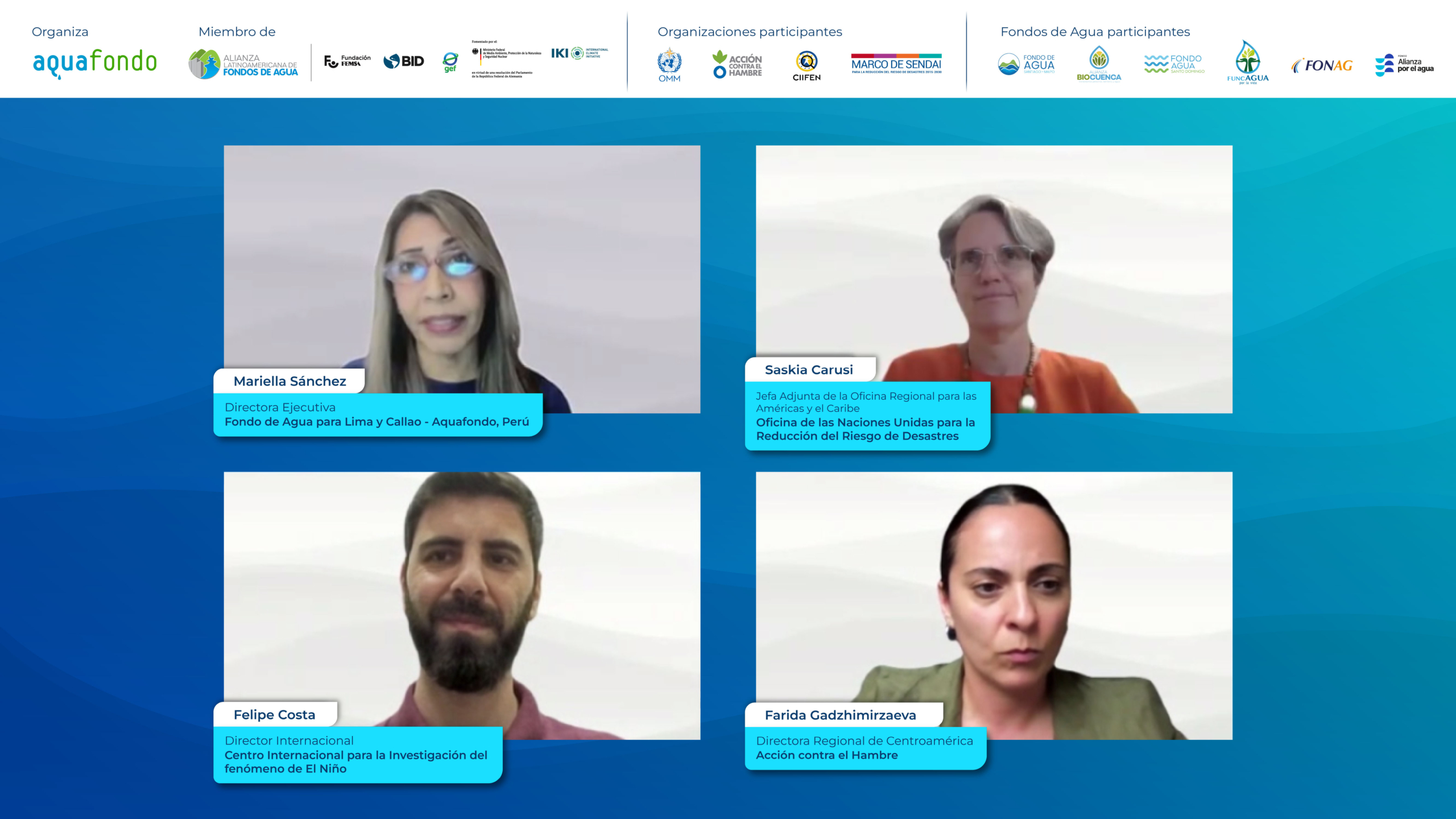
The panel “Regional Agenda for Addressing the Climate Crisis and Extreme El Niño Events” brought together Saskia Carusi, from the United Nations Office for Disaster Risk Reduction; Felipe Costa, from the International Research Centre on El Niño; and Farida Gadzhimirzaeva, from Action Against Hunger.
The experts agreed that climate information must be translated into concrete and timely decisions that foster coordination among governments, scientific institutions, the private sector, communities, and international cooperation organizations.
Saskia Carusi emphasized the need to take advantage of the lead time provided by forecasts to strengthen preparedness, integrate information on hazards, exposure, and vulnerability, and establish protocols that enable preventive measures to be activated before impacts occur.
For his part, Felipe Costa highlighted the importance of gaining a deeper understanding of the El Niño phenomenon and its historical impacts to identify vulnerable territories and sectors, as well as strengthening multi-stakeholder partnerships to mobilize resources for prevention.
Drawing on Action Against Hunger’s experience in Central America, Farida Gadzhimirzaeva warned that delayed action can turn a foreseeable climate risk into a humanitarian crisis, undermining people’s dignity and affecting their livelihoods, food security, education, and health. She therefore emphasized that preventive action helps reduce the need for future emergency response efforts.
Water Funds: Experiences That Demonstrate the Power of Anticipatory Action
The dialogue also provided an opportunity to learn about the experiences of Water Funds in the Dominican Republic, Colombia, Guatemala, Chile, Ecuador, and Peru, which are implementing solutions to strengthen water security in the face of extreme climate events.
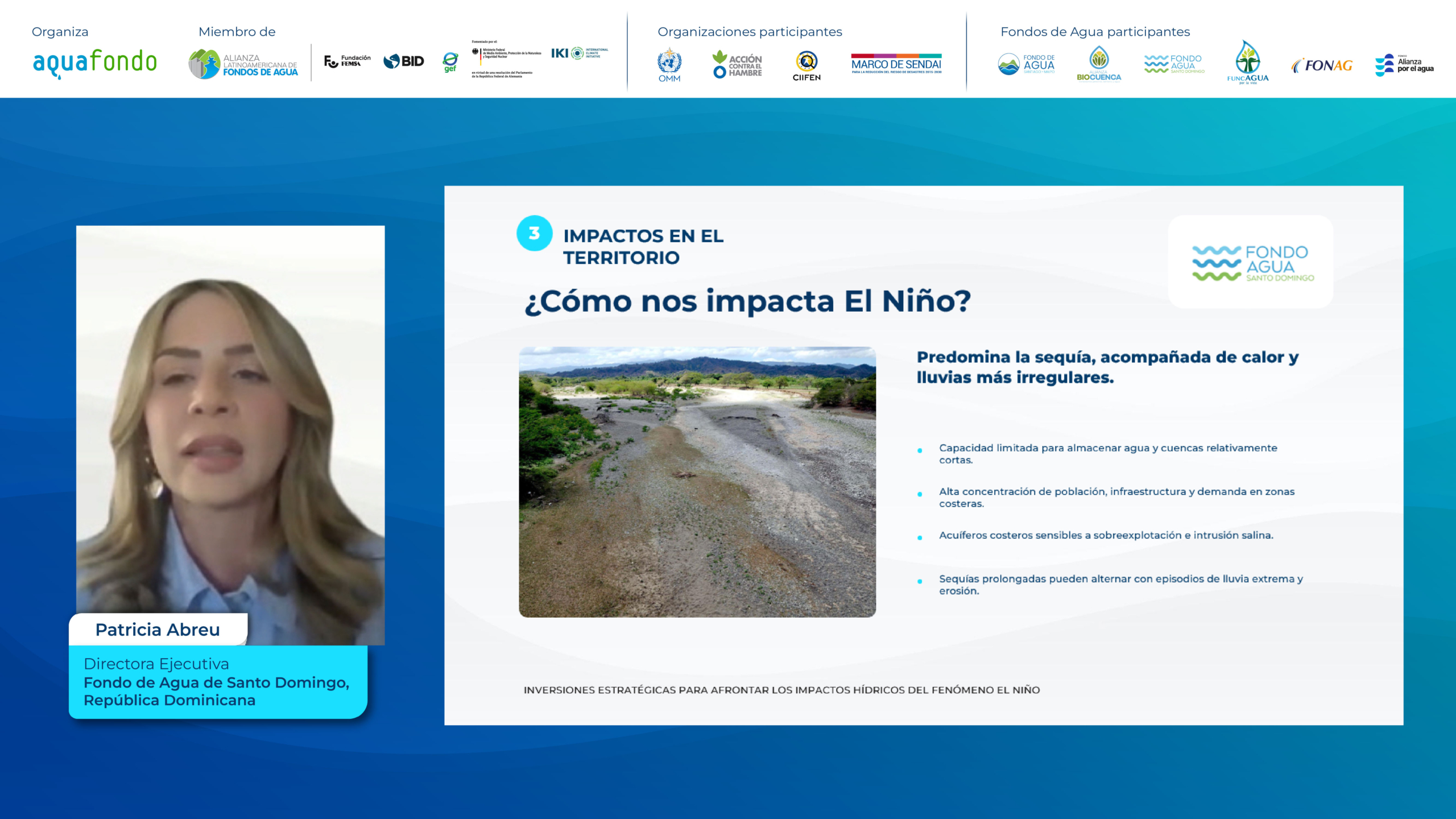
From the Dominican Republic, Patricia Abreu, Executive Director of the Santo Domingo Water Fund, explained that droughts and periods of irregular rainfall affect both the planning of interventions and water availability. In response, the Water Fund is implementing forest cover restoration and agroforestry initiatives, while also strengthening the capacities of local communities.
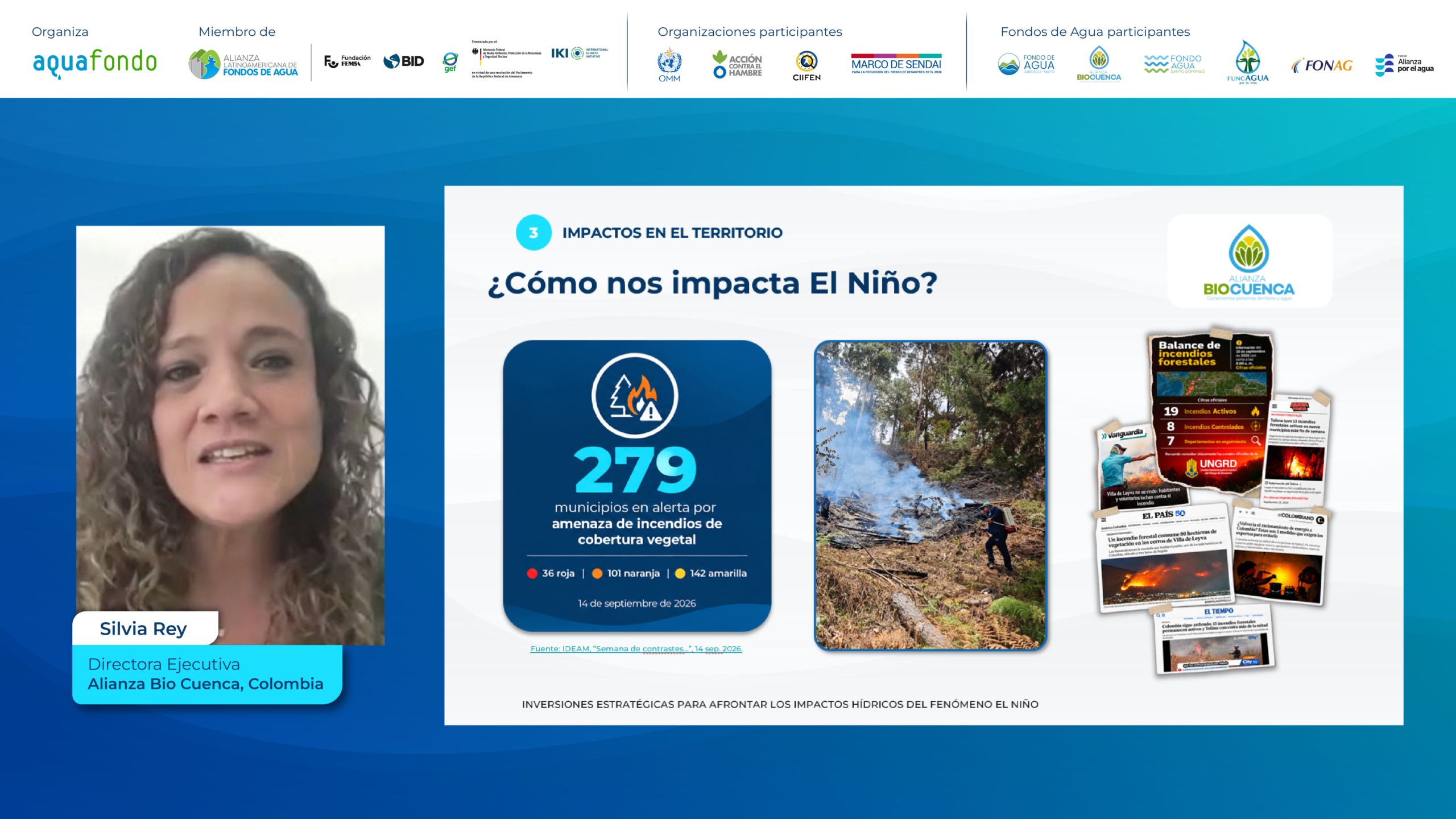
From Colombia, Silvia Rey, Executive Director of Alianza Bio Cuenca, presented examples of anticipatory action, including native forest conservation, restoration of degraded areas, rainwater harvesting for non-potable uses, and capacity-building initiatives to improve irrigation practices.
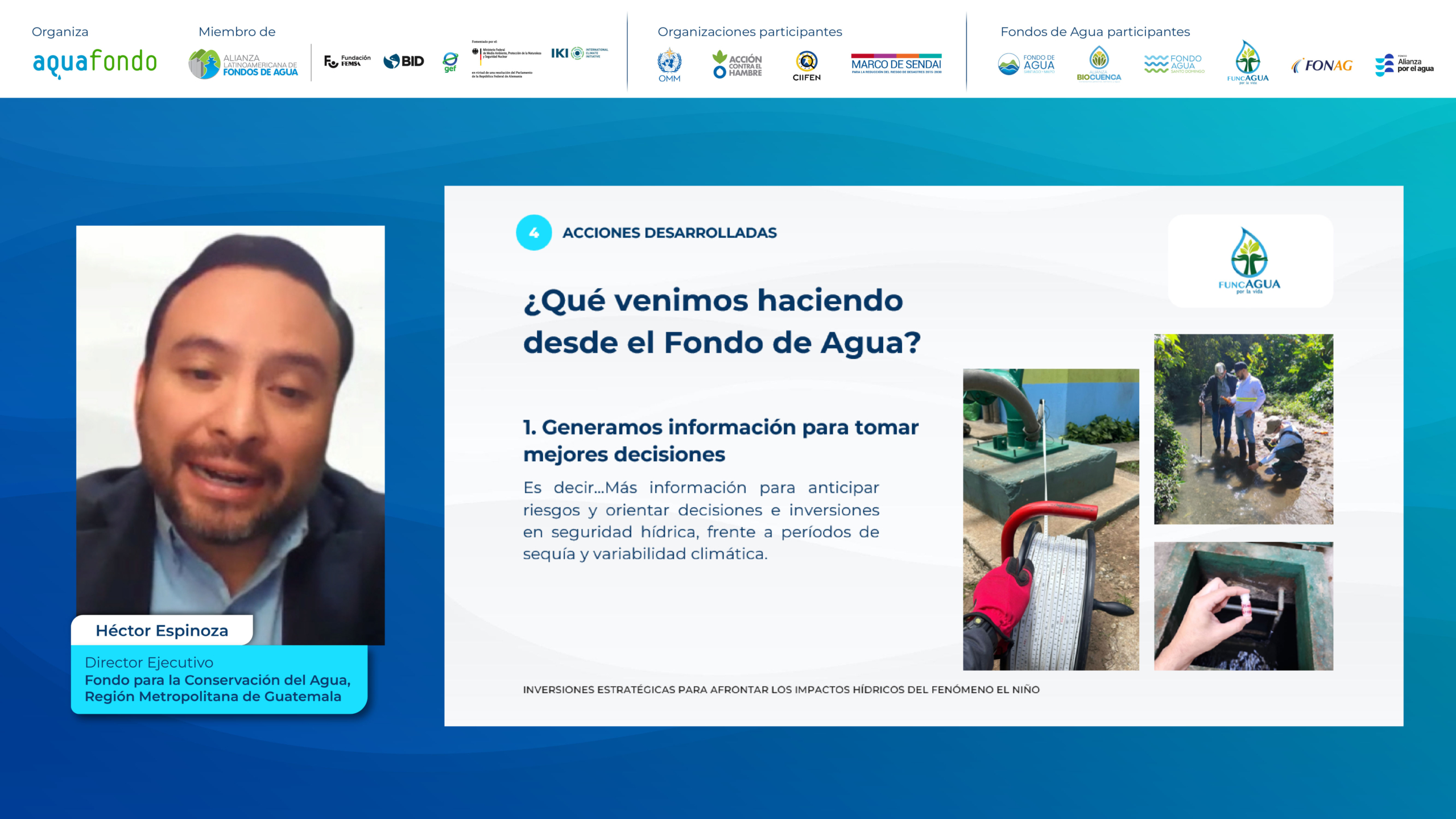
In Guatemala, Héctor Espinoza, Executive Director of the Foundation for Water Conservation in the Metropolitan Region of Guatemala, shared his experience in implementing managed aquifer recharge as an alternative to strengthen water availability in the face of drought conditions.
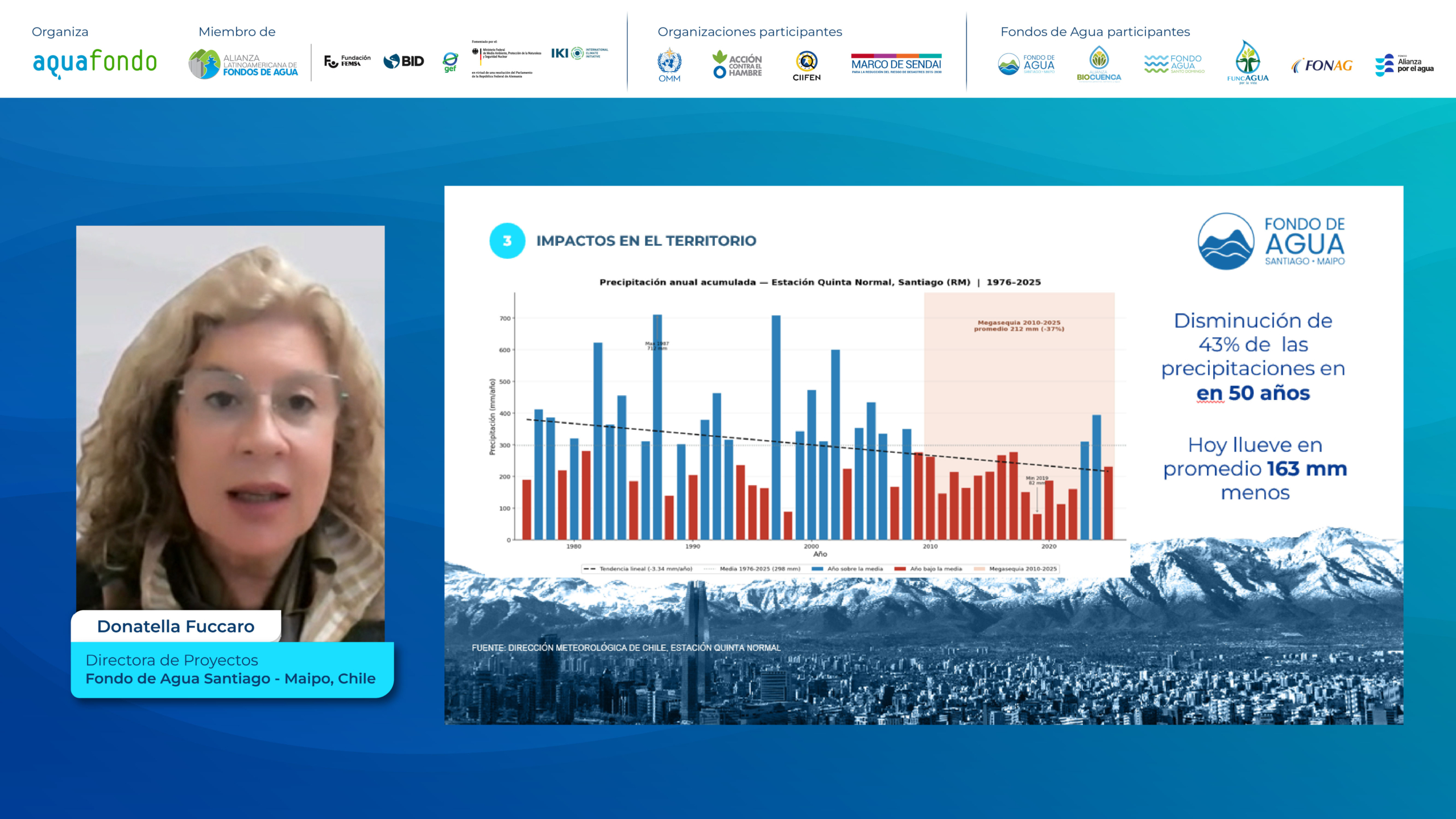
From Chile, Donatella Fuccaro, Project Director of the Santiago-Maipo Water Fund, presented several examples of Nature-Based Solutions (NbS) for water and soil conservation, including rain gardens and rainwater-absorbing forests designed to promote infiltration and reduce the risk of urban flooding.
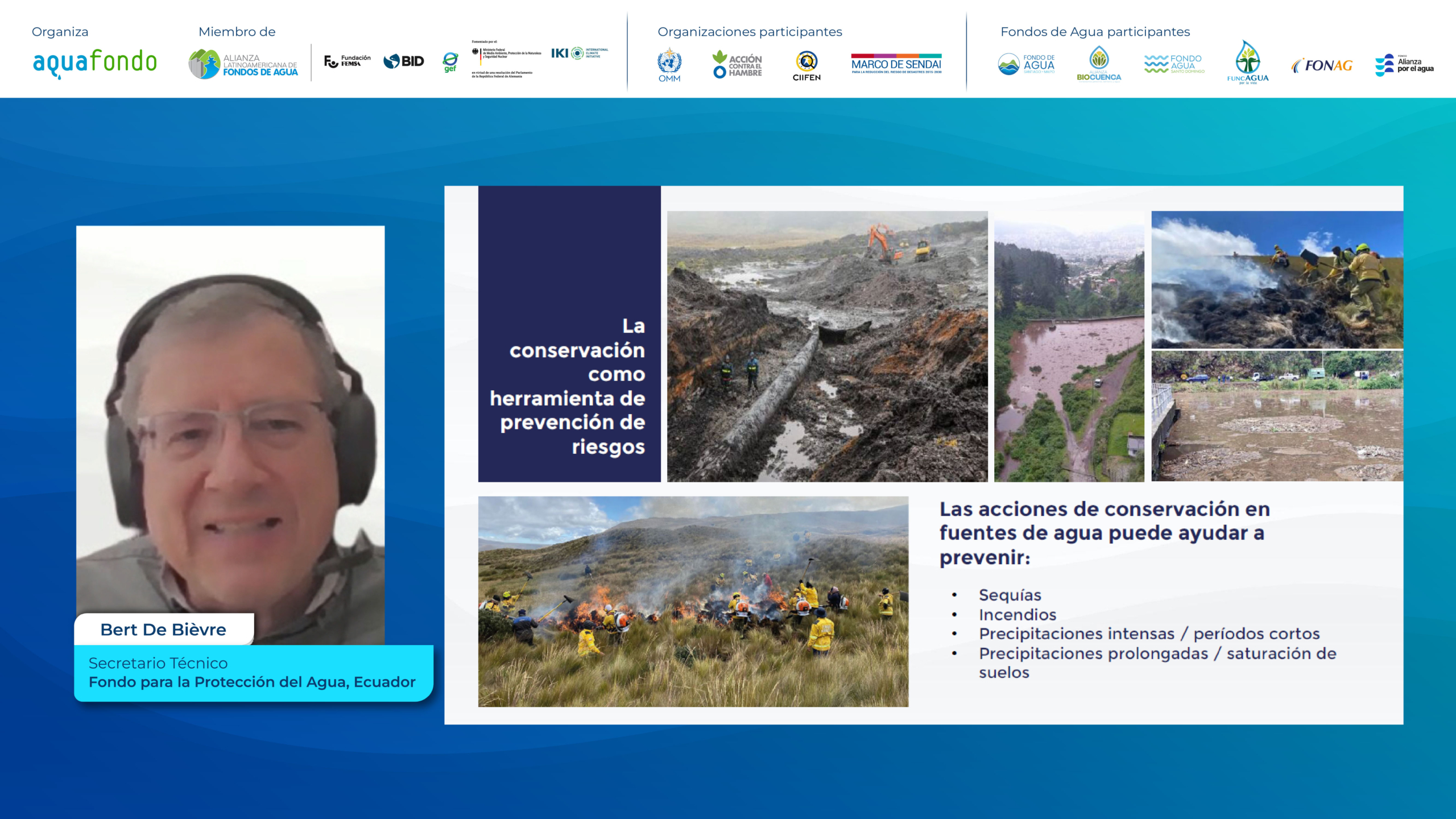
From Ecuador, Bert De Bièvre, Technical Secretary of the Fund for Water Protection, presented a portfolio of interventions combining long-term conservation measures and efforts to slow down the hydrological cycle, medium-term reservoir management, and short-term early warning systems.
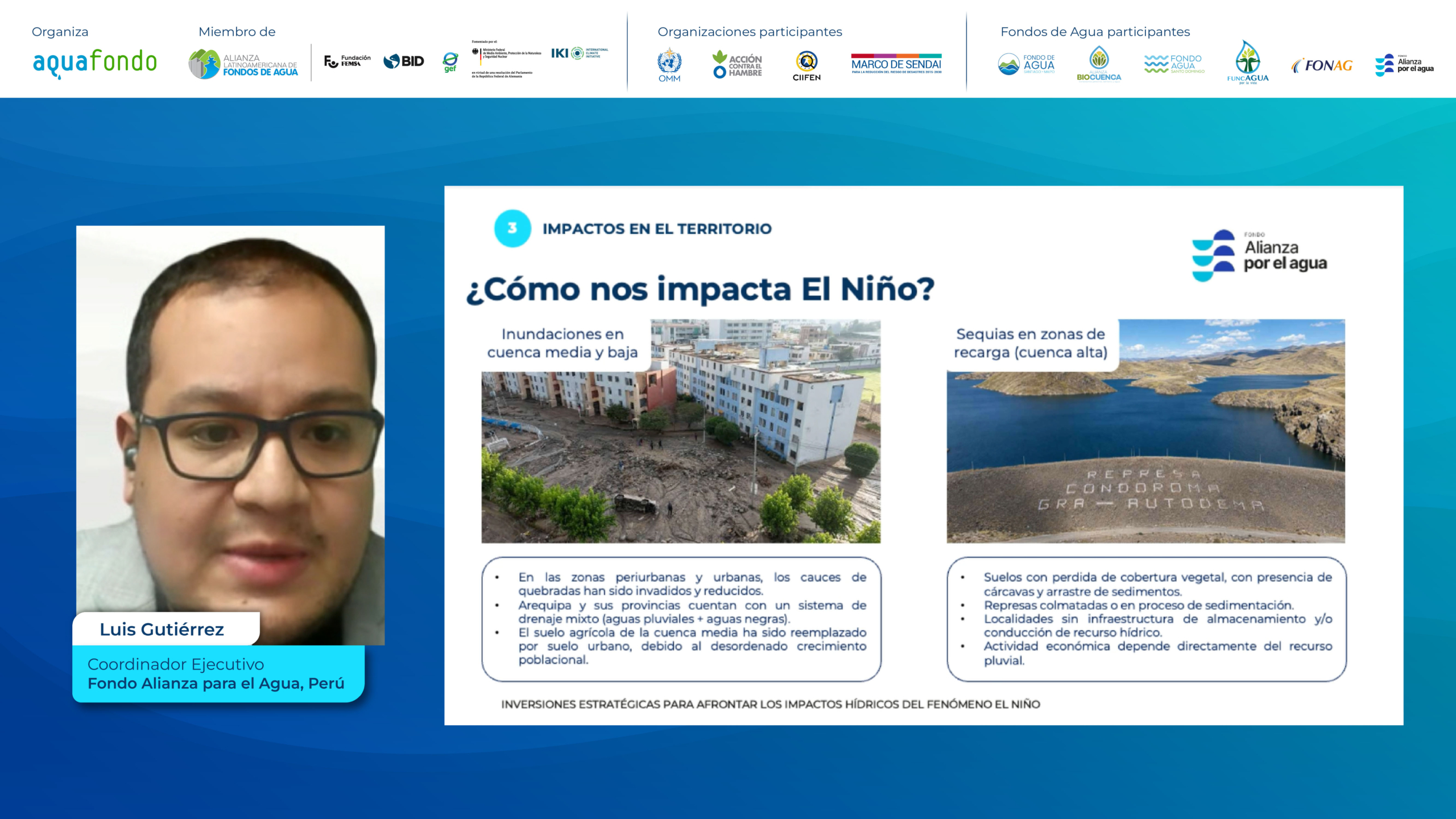
From Peru, Luis Gutiérrez, Executive Coordinator of the Alianza por el Agua Water Fund, shared the experience developed in Arequipa, where reforestation and water infiltration initiatives are being implemented through living ravines, helping to harness rainwater and enhance the value of natural infrastructure.
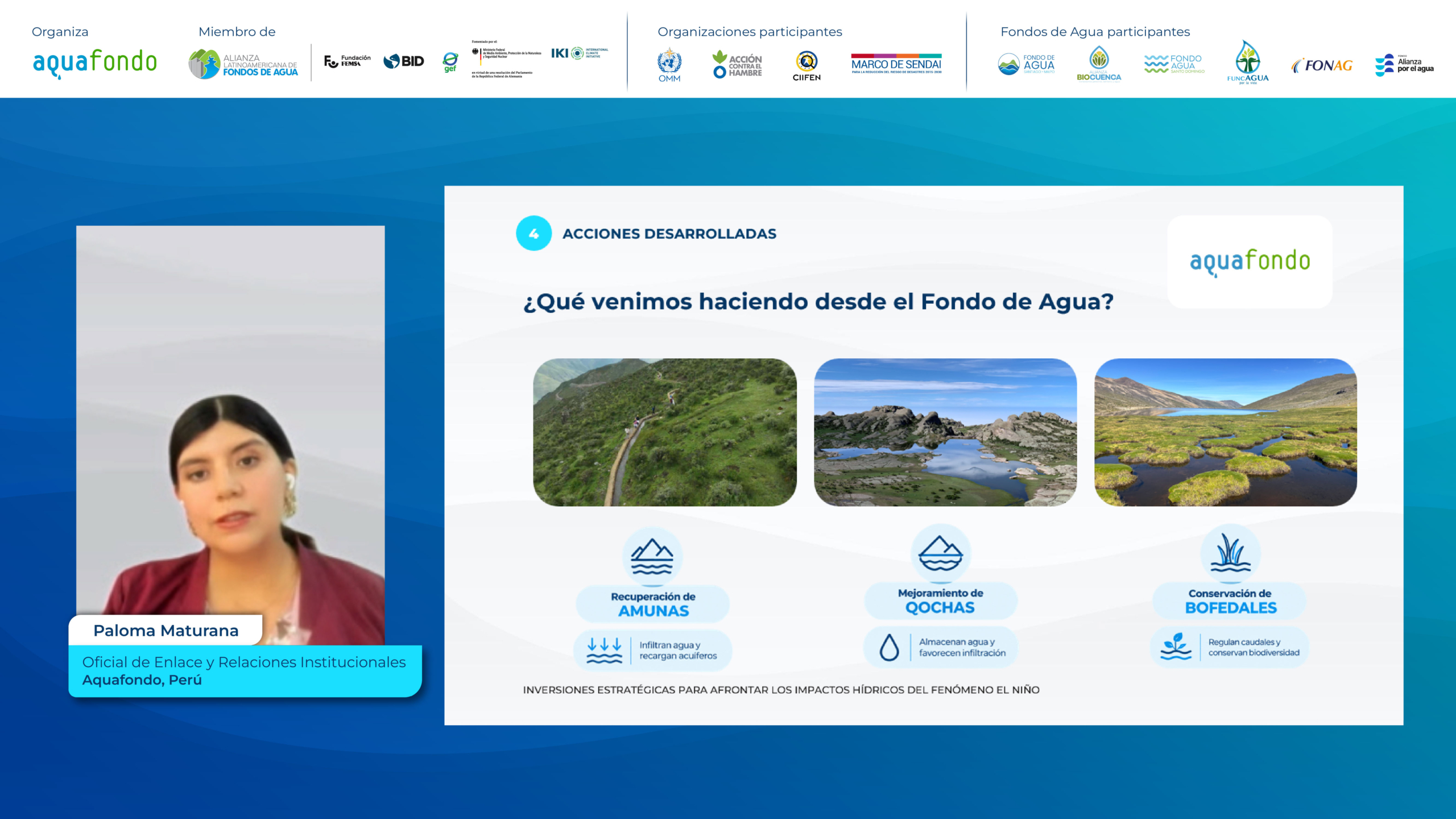
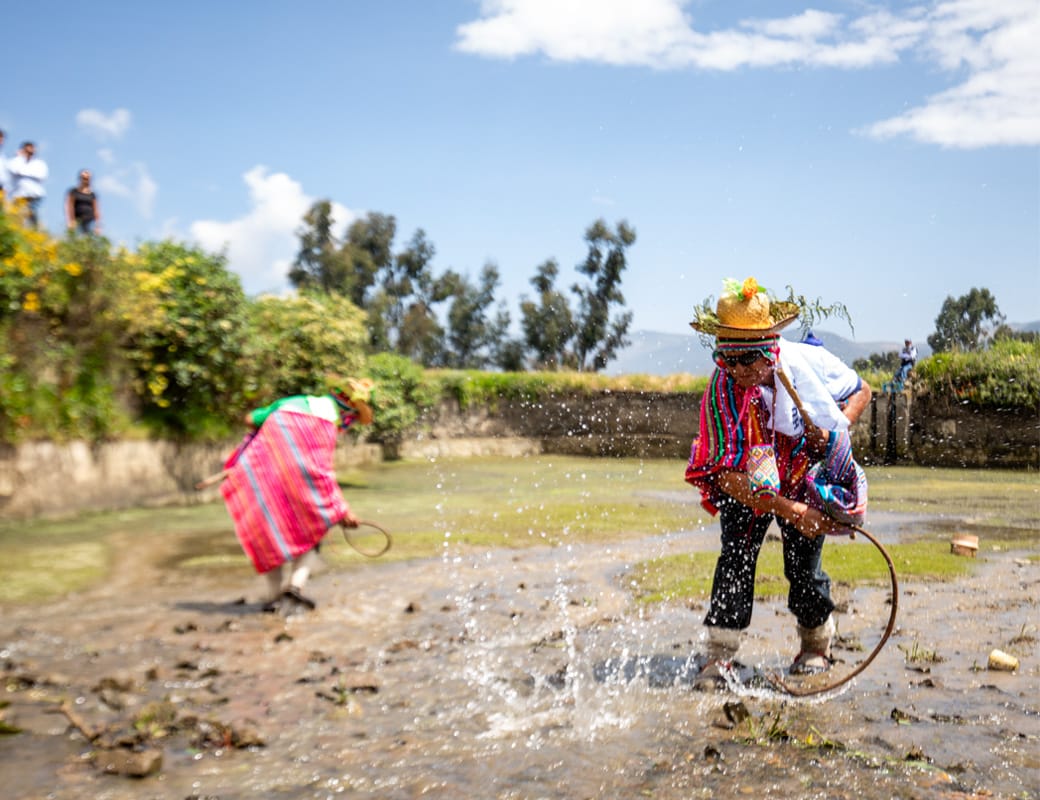
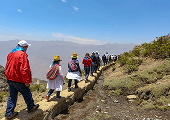
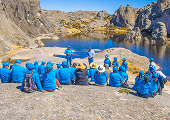
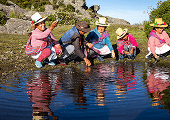
Finally, Paloma Maturana, Liaison and Institutional Relations Officer at Aquafondo, highlighted the contribution of ancestral water management systems and natural infrastructure, such as amunas, qochas, and bofedales, which help capture, infiltrate, and regulate water. These initiatives are implemented with funding from partner organizations, in close collaboration with local communities, and always supported by scientific evidence.
Turning Knowledge into Action
The dialogue concluded with a call to turn the knowledge and experiences shared into concrete actions focused on prevention and investment.
For Water Funds, anticipatory action means strengthening early warning systems, conserving and restoring strategic freshwater ecosystems, preparing communities, directing investments toward the most vulnerable areas, and improving multi-stakeholder coordination.
Through this dialogue, we at Aquafondo reaffirm our commitment to promoting the exchange of knowledge and experiences among Water Funds across Latin America and the Caribbean, fostering partnerships that drive strategic investments to strengthen water resilience in communities and territories facing the impacts of the El Niño phenomenon.
We invite you to watch the full dialogue and learn more about the experiences shared:

